What is worth working on?
A question I've been grappling with for a while, here are my thoughts.
TL;DR.
- When people say they want to build a company, they really want to build leverage. Leverage is a force multiplier for your judgement.
- Leverage decomposes into three assets: skills, people, and capital. You could view every career decision as your expected delta growth in these three areas.
- Picking your North Star (or your best guess at one) and reverse-engineering the path to get there is one way to narrow down what skills and network you want to build.
- The secretary problem suggests you should explore different roles and skills until roughly age 29–30 (1/e of adult life, adjusted for how younger people have more energy/risk appetite), then commit to the best thing you’ve found after.
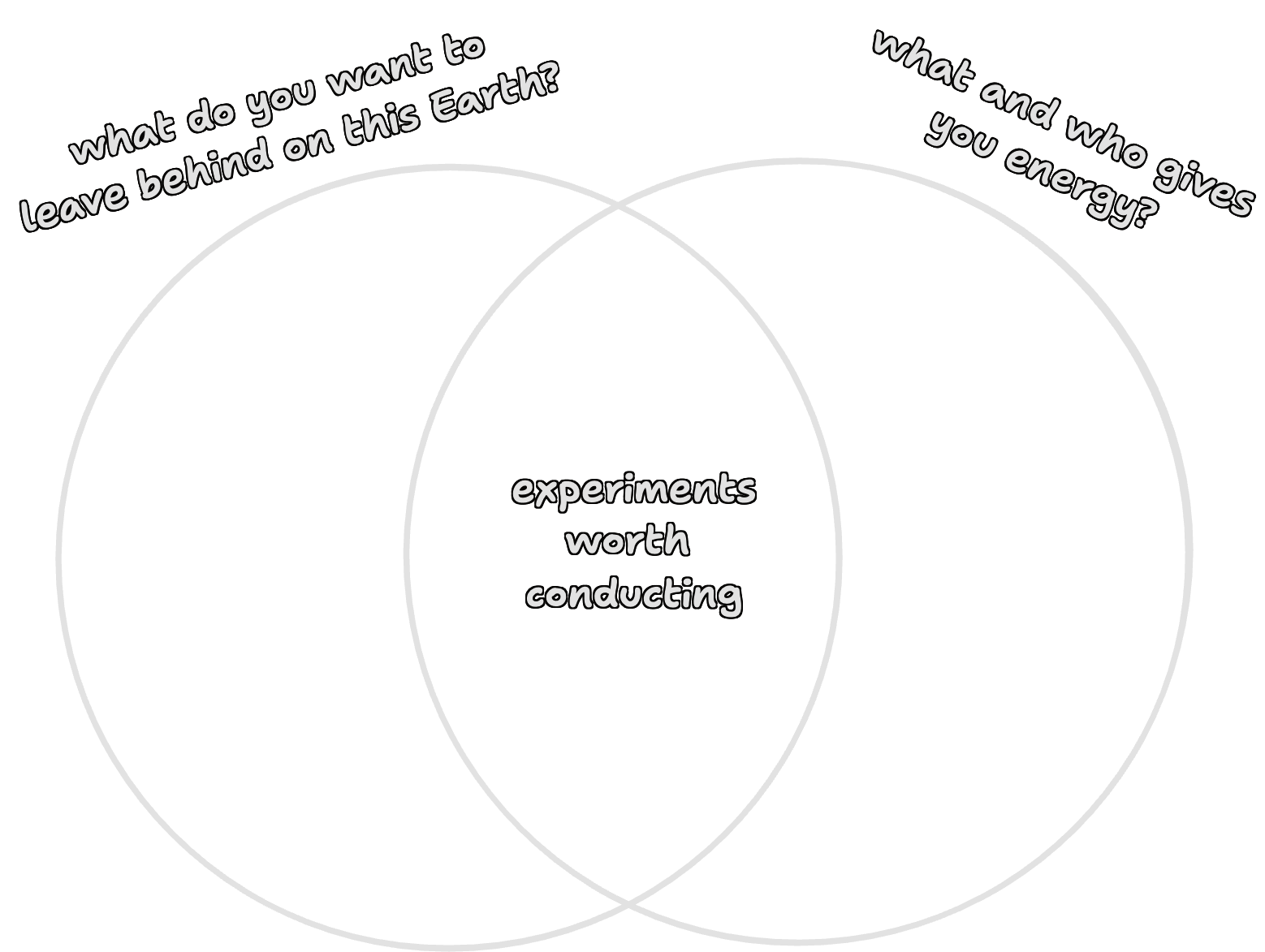
This image summarizes my main point if you don't have 14 minutes to read this right now.
Building leverage
It’s worth knowing what you want to leave behind on this Earth after you’re gone. Here are my thoughts on a framework to approach learning and impact.
I think when people say they want to build a company, what they mean is they want to build leverage. Leverage is a force multiplier for your judgement. You might want to use your leverage to gain personal freedom, take care of your family, bring something new into the world, or solve a problem you deeply care about.
Building a company is one way to build leverage. But contrary to what I originally thought, it is definitely not the only way, especially to start out with.
One way to decompose leverage is into skills, people, and capital.
- Skills. Are you uniquely good at a core skill useful to others? In tech land, there’s building and selling, but there’s so much that this can be broken down into. Synthesizing information into bets, taste for important problems, storytelling, teaching, building a community, seeing patterns across qualitative and quantitative data. If you lean into what feels like play, you’ll naturally outcompete everyone who treats building that skill like a chore. It is truly worth exploring what feels like play to you. What you want to do when you have free time. Don’t settle. Once you find it, then let it consume you.
- People. Who trusts you, and how much? One way to visualize this is graph theoretic, with people as weighted nodes, with two weights on each edge representing the trust each person has in the other. You can go breadth first in building trust through building a following on a platform, or meeting a lot of new people. You can go depth first by building deep relations with a few people. Being authentic usually takes you further in both respects. It’s best to spend your time in a way that fulfills you, but I think for one’s sanity, it’s important to have at least one deep connection who you can be vulnerable with.
- Capital. The universal religion. A stored form of leverage. Everyone believes in the worth of capital, so it can be traded for effectively anything. You can use it to buy assets you can’t build yourself, benefit from other people’s skills, and motivate people to help you (although this is brittle in solitude since mercenaries are fickle). You can use capital to bet on people/assets you believe in. This is cool because it’s a powerful alternative to your time. Capital can be grown, while time is quite finite.
As you can imagine, these are deeply intertwined. You build trust with people based on your skills and values. It is easier to hold good values when you aren’t playing zero-sum games, and building skills means you can play positive-sum games: you gain capital/wealth by creating wealth for others. You can combine your skills and your trusted network to get shit done, and raise capital from people who trust you and your skills to accelerate getting that shit done.
Choosing opportunities can then be broken down into the delta each opportunity gives you in terms of growth in skills, people, and capital. Starting your own company might be lower delta than joining people you respect on a shared mission. It’s worth reflecting and talking to trusted people who know you to understand how each direction you’re considering will help you grow and in which dimensions.
But simple gradient descent can make you end up in a local maximum. It can help to think about your life teleologically. I came across the concept of teleologic in Ted Chiang’s Stories of Your Life, the short story behind the movie Arrival. A teleological explanation explains something by referencing its purpose, goal, or end function, rather than its past causes, answering “What is it for?” instead of “How did it happen?”
Simply put, you can choose your purpose in your life. Your North Star. You can reframe your life to serve that.
Finding your direction
It’s good to have a North Star for your life because it significantly simplifies decision making about what you should do, especially when considering which skills are worth building and which people to spend time with.
If you’re confused, come up with your best guess for your North Star and try to articulate it. You can always change it. Surprisingly few people try to come up with one, even though we’re all searching for meaning in our lives.
You can have a broad North Star to start with, and break it down into checkpoints.
To make this more concrete, we can walk through an example exercise. You might want to “help people.” You probably want to help people you relate to first.
You will probably want to put the oxygen mask on yourself before you can help others. So step one could be to earn more money than you spend on your necessities. Some people expand their necessities into their desires, it’s up to your discipline to decide where you draw the line.
Then comes your immediate family. Your parents, your partner, your current/future kids, grandkids. People usually overestimate the necessities for their immediate family because spoiling people you love feels less icky than spoiling yourself. So a lot of people stop here when it comes to “helping people.”
Some people think about their community beyond that. “Helping people” can then take the lens of your experiences. If your mom has cancer, you probably want to find a cure for that. If hyperinflation erased your family’s savings, you might build decentralized systems to provide the stability the state couldn’t. If you just love learning, you might work on BCI to help you and others learn faster.
“Helping your community,” isn’t necessarily purely altruistic. I think it is nearly inevitable to have some selfishness wrapped up in there. People who have something to prove, want to leave a legacy, or are guided by religion are less likely to quit when things get hard. People who had comfortable lives and worked on “fixing climate change” as an abstract problem probably didn’t get too far.
John D. Rockefeller, who at his peak was singlehandedly worth 1.5% of US GDP, believed God had chosen him to accumulate capital so that it could be distributed more effectively for the “good of mankind.” In his mind, the harshness of his business tactics was necessary to bring “the poor man’s light” to the world—a goal he viewed as inherently Christian. He tithed 10% of his income to the church from his very first paycheck and later used his massive fortune to fund many Baptist and Christian institutions, including University of Chicago.
Sam Zemurray was a penniless Russian Jewish immigrant who arrived in America in 1891 at fourteen, not even able to afford shoes, knowing no one. He built a banana empire that eventually swallowed United Fruit—which had more power in Central America than any government there. He started off by buying bananas that were about to rot, and scrambling to get it to end customers as fast as possible. This grew into him building one of the most efficient cross-continental supply chains in the world. As part of this, he:
- built railroads to get bananas from his plantations to the coast, leading the charge in the mud and heat of the Honduran jungles
- bankrolled a coup to overthrow the Honduran government with a few dozen men to lower his taxes (decades later, the CIA would study United Fruit’s playbook when planning Operation PBSUCCESS in Guatemala)
- first used pesticides and helped organize the first pharma efforts
- was instrumental in making Israel a state

Sam the Banana Man
His driving conviction was that the man closest to the dirt deserved to win over the man behind the desk, and he spent his life proving it. Was he a good person? Jury’s out. Did he build leverage from nothing? Absolutely.
Once you have some answer to your North Star, then that’s your macro-scale direction for where to spend your time building skills and building relationships. Capital is commoditized, so thankfully there’s less decision paralysis there.
Another important part is the micro-scale. What gives you energy? Worth writing some of these down in weekly or monthly reviews. When did you feel most alive? What characterized the month for you?
The intersection of your macro and micro is a very good place to spend your time. Those are the people and learnings that you love spending time on that get you closer to where you want to be.
Thinking in decades
There’s a clean result from the secretary problem: if you know how long you have, you should spend the first 1/e of that time just exploring — trying things with no pressure to commit — and then switch to doubling down on the best thing you’ve found. Assume five decades of healthy adulthood, 18 to 68. Naive linearity suggests we can explore till 35, and then lock in your direction.
Younger people have more energy/risk appetite, so maybe we should weight the early 20s more heavily for experimentation. Still, you could make the case for the explore/exploit cutoff landing somewhere around 29 or 30.
This is very surprising. Optimal stopping theory suggests we should explore different roles, different directions and skills until we’re 29-30. That’s not far off, but it’s not tomorrow either. We’ve still got a real window to wander, try things that might not work, and collect data on what actually fits.
This means that unlike what society expects: apply for a major at 18, then work for the best company in that direction, and do that for 50 years, you should try different roles, develop different skills and networks until you’re 29-30. Then after that, pick the first thing that feels better than anything you’ve tried thus far.
Is this model perfect? Not at all. But it suggests two things worth considering:
- We’re probably better off treating careers like a series of hypothesis tests, not a one-shot lifelong commitment. Try a bunch of different things for 3-12 month stints. Learn what you like and dislike about them. Then iterate based on those learnings (the iteration might also be that you landed on something you love, and you want to do it for longer).
- Try different things. Explore the graph of possibilities. Each iteration, you could change one independent variable: which industry you’re in, which place you’re working from, which role you’re working in, the size of the company you’re a part of, the flavor of problem you’re tackling.
If you’re driven by a macro goal to improve education where you come from, you could go at it directly by becoming a teacher → principal, or joining the local government to advocate for better policies and funding in public education. If the micro-level day to day of being a teacher energizes you, it’s probably the right answer. Go for it.
But if you care more about the macro goal of education than the actual day to day enjoyment of teaching kids, then thinking in decades, you could go into tech/finance/medicine, or whatever else energizes you on a micro level, and learn enough about education so that you can spend your leverage earned from your direct interests to serve your macro goal.
Joe Liemandt and Alpha School
Alpha School is a great example of this. Joe Liemandt built Trilogy Software, an early SaaS success, then ESW capital: a PE company buying software companies that have achieved market saturation and making them more efficient. He spent a couple decades on building this enterprise. He repeatedly describes himself as a product guy, and loves thinking about making products better. That was his differentiator which built a valuable cashflow generating business. He is now using that cash flow to invest his leverage towards his macro goal: making education 10x better.
45% of high school students in America don’t know algebra (scored below NAEP Basic in 12th-grade math, which means they can’t solve for x in 3x + 7 = 22 (2024)). This is a systemic problem, not a student problem.
Alpha School operates on a radical premise: the 200-year-old model of a teacher lecturing at the front of a room is obsolete.
When he asked 5th graders what would make them love school, they said “less school.” He negotiated a deal: if they engaged with the AI tutors for two hours, he’d give them the rest of their time back for things they loved. This resulted in the “Time Back” software.
Time Back is an AI tutor personalized to each kid’s understanding and interests. This has measurably helped them learn twice as much academic material as a regular 6-8 hour school day in just two hours.
The remaining four hours of school are dedicated to high-stakes “life skills” like public speaking, grit, and entrepreneurship. Examples include producing live news broadcasts, hosting podcasts, and delivering TEDx-style talks, managing Airbnb rentals, and even orchestrating international programs for refugees.
Liemandt learned that, counterintuitively, kids love it when you raise the standards of what you expect from them. If you help them push past what they can do (like every kid running a 5k race and finishing it), they get a lot happier and more motivated.
He’s investing the 3 pillars of his leverage now through:
- Skills: He’s the principal of a physical Alpha School, the flagship campus. He spends all his product skills to rethink education and make it a huge business, which no one has really done before. At this physical campus, they’ve reduced the time it takes to master an entire grade level of a subject to roughly 20–30 hours. Nuts.
- People: His cofounder Mackenzie Price and him have a 25 year long relationship from working together on Trilogy Software, and Mackenzie’s husband is the CFO. The founding team is building for their kid’s future, and there is deeply aligned interest and trust which took decades to earn.
- Capital: Investors don’t invest in edtech because there is bad precedent in the space. Most valuable company there is Duolingo, which is an entertainment business. Liemandt is pouring $1 billion of his own capital into Alpha School and its scaling platform, the Timeback app.
Liemandt’s North Star is to make every kid love school more than vacation. Pretty sick. This would probably be a lot harder if he went for it directly out of Stanford.
There’s no ground truth to purpose
After all this talk about decades-long planning to gain leverage, I want to raise the core question. What is the right way to live?
I’ve wrestled with this for a long time. I continue to wrestle with this. Is a person who makes more money, does hard things, gains power, and has more “impact”, a better person?
As of now, I think “impact” is very subjective. I think a good life is one which you are happy with. This might mean working a 9-5 and spending time with your kids and spouse. Or making pottery and sharing your pieces with a small online community. Or being a leader of a union using shady tactics to benefit your union. Or working 100 hours a week for decades on a mission to gain money, power, and respect because you want to prove your dad wrong. All of these are candidates for a great life.
In my eyes, the bar to clear is personal: can you look back and honestly say you don’t have any big regrets? If any pop up, that’s a good direction to start making some changes.
Inspired by a conversation with John Bailey.